
Precision heat-treatment control. Rigorous multi-point tensile testing. Built for automated production lines that cannot afford downtime.
Sourcing wire that consistently meets tensile and elongation targets is not a quality checkbox — it is a direct production cost lever. As a leading steel wire manufacturer, we engineered our entire heat-treatment process around one objective: delivering wire that performs exactly as specified, every coil, every shipment, at scale.
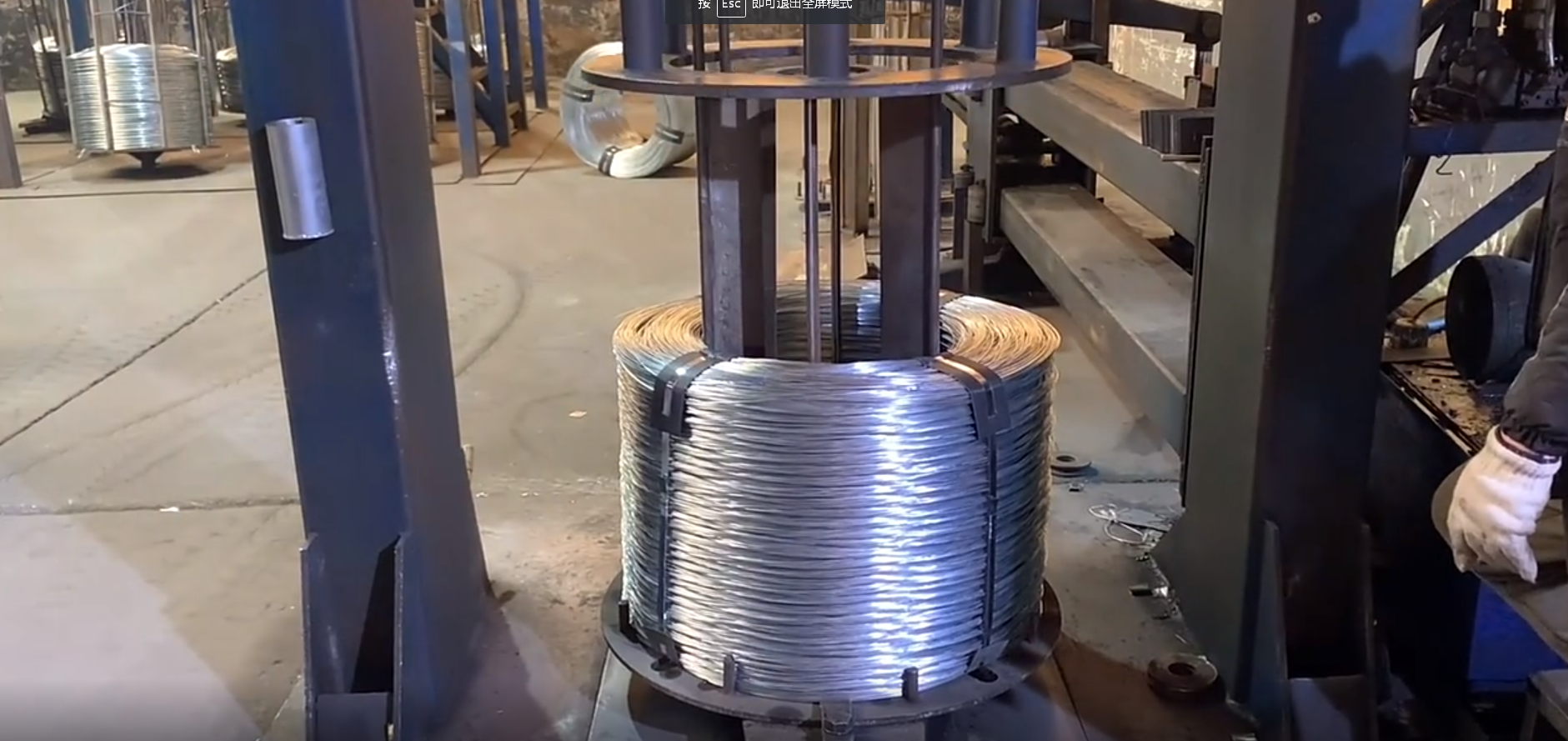
High-tensile binding wire coils — precision heat-treated, multi-point tested before shipment.
Production-Line Reality Check
When Wire Quality Fails: Real Production Losses Buyers Know Too Well
Across construction sites and wire mesh fabrication plants, poor tensile and elongation performance is the hidden multiplier that drives operating costs far above budget. The problem rarely announces itself as a “wire quality issue” — it shows up as stalled production shifts, rejected batches, and maintenance calls nobody planned for.
These are not edge cases — they are the dominant cost drivers we hear from buyers across Southeast Asia, the Middle East, and Europe every week. If your current supplier cannot hold a consistent tensile and elongation window across a full production batch, our custom wire and mesh solutions are designed specifically to eliminate this variability.
Manufacturing Process
Our Solution: Automated Heat-Treatment Control for Precision Tensile and Elongation Output
The root cause of inconsistent wire performance is almost always an uncontrolled annealing or heat-treatment process. Temperature drift of even a few degrees across a furnace zone, or minor variation in wire dwell time, translates directly into tensile strength scatter and elongation shortfall that no downstream inspection can correct.
Before any coil is cleared for shipment, it goes through multi-point tensile and elongation testing at our in-house quality lab. We do not sample-test one coil from a pallet — we verify across the full production run to confirm the entire batch meets specification. Certificates of conformance and full test reports are standard documentation included with every order.
Our quality control methodology aligns with internationally recognized ASTM standards for steel wire, giving procurement managers and quality engineers a clear benchmark against which to verify our delivered performance.
This level of process control reflects the full scale of our production capability and equipment investment in automated line configurations and quality audit systems.

Automated heat-treatment production line — temperature and dwell time locked per gauge specification to eliminate tensile scatter.
Application Coverage
Where Our Wire Performs: Application Coverage Map by End-Use Sector
Wire specification requirements differ significantly across end-use sectors. Use this map to identify which gauge and tensile range applies to your production stage and industry segment before requesting a quotation.
| Stage | Industry Segment | Wire Application | Recommended Gauge | Tensile Target |
|---|---|---|---|---|
| 01Construction | Rebar fabrication yards On-site structural work Precast concrete plants |
Rebar tying & bundling Manual and automated tying guns |
20–22 Gauge (0.81–0.91 mm) |
350–400 MPa High elongation priority |
| 02Fencing | Security fence manufacturers Perimeter barrier fabricators Gabion basket producers |
Woven wire mesh panels Hexagonal netting Gabion mesh weaving |
16–18 Gauge (1.25–1.65 mm) |
350–420 MPa Balanced tensile & elongation |
| 03Industrial Mesh | Welded mesh panel factories Road & slope protection mesh Mining screen manufacturers |
High-speed automated weaving Welded panel fabrication Structural mesh rolls |
5–14 Gauge (2.0–5.0 mm) |
400–550 MPa High tensile for structural use |
| 04Agriculture | Poultry cage manufacturers Vineyard trellis producers Greenhouse frame suppliers |
Lightweight mesh & netting Crop support wire Animal enclosure mesh |
18–22 Gauge (0.71–1.25 mm) |
350–400 MPa Flexibility and corrosion resistance |
| 05Infrastructure | Road slope protection Rockfall netting contractors Erosion control projects |
Heavy-duty mesh panels Rock net systems Retaining wall mesh |
5–10 Gauge (3.5–5.0 mm) |
480–550 MPa Maximum tensile strength |
Procurement Selection Guide
Find the Right Wire for Your Production Line
Each card below identifies the specific measurement challenge for that application, explains why our wire specification solves it, and gives the “best fit” condition so you can match your requirement directly to a product specification before contacting us.
Binding wire for manual and automated rebar tying operations
Rebar tying wire must sustain 180-degree torsion bends without snapping at tying gun speeds of 40–80 ties per minute. Elongation of 20% or above is the minimum threshold for reliable performance — wire below this value breaks on the first tight twist under cold conditions on site.
Mesh wire for high-speed automated woven and welded panel lines
Automated weaving machines feed wire through guide channels and bending dies at high cycle rates. Hardness variation across a single coil — common in poorly controlled annealing — causes guide jams and mid-cycle breaks that stop the line. Die wear accelerates by 2–3x when coil hardness is uneven versus a consistent-spec coil.
Mesh wire for perimeter security fence and gabion basket manufacturing
Security fence mesh requires consistent aperture geometry — an elongation-variable wire that stretches at some points and resists at others produces uneven panel face geometry that fails flatness specifications and complicates field installation. For gabion mesh, tensile consistency also determines long-term load-bearing capacity after backfill.
High-tensile wire for road slope protection, rockfall netting, and retaining mesh
Infrastructure applications demand maximum tensile in the 480–550 MPa range — these panels must hold structural load without permanent deformation under rock and soil pressure. Standard binding wire at 350–400 MPa does not meet the structural threshold for these applications and will creep under sustained load.
Technical Specifications
Full Specification Reference: Binding Wire and Mesh Wire Series
Use the table below as your direct procurement reference. Both gauge ranges are available with custom tensile windows — state your target MPa range at enquiry stage and we will confirm feasibility and lead time within 24 hours.
| Product | Gauge Range | Diameter (mm) | Tensile Strength | Primary Application | Key Specification Tags |
|---|---|---|---|---|---|
| Binding Wire | 20–22 Gauge | 0.71–0.91 mm | 350–400 MPa Custom range available |
Rebar tying, bundling, strapping; manual and auto tying gun applications | |
| Mesh Weaving Wire | 5–18 Gauge | 1.25–5.00 mm | 350–550 MPa Custom range available |
Automated woven and welded mesh panels, security fencing, gabion mesh, agricultural netting, infrastructure protection mesh |
Buyer FAQ
Frequently Asked Questions from Wire Procurement Buyers
How does your wire solve the wire-break problem on automated mesh weaving machines?
Wire breakage on automated weaving lines is almost always caused by tensile scatter — coils where some sections are over-hardened and brittle while others are under-hardened and weak. Our automated heat-treatment process eliminates this scatter by holding temperature and dwell time to a locked recipe for each gauge specification. The result is a coil with a consistent hardness profile from start to finish, which feeds through automated weaving machines without jamming, snapping at feed guides, or causing premature die wear. Buyers who switch to our mesh wire consistently report a measurable reduction in unplanned stoppages within the first production run.
What is the most effective way to reduce overall binding wire consumption cost on large rebar tying projects?
The dominant cost factor in binding wire is not the purchase price per kilogram — it is the effective yield per coil once wire breakage waste is accounted for. Wire with poor elongation forces workers to tie joints more loosely to avoid breaks, or it snaps mid-tie and the partial length is discarded. Both outcomes raise the actual wire consumed per joint. By specifying 20–22 gauge binding wire with a controlled tensile range of 350–400 MPa and verified elongation above 20%, you recover usable yield per coil and reduce material waste per joint by an estimated 10–18%. Combined with lower labor time per joint, the total cost per structural joint drops substantially versus cheaper, inconsistent wire.
Can you manufacture wire to a custom tensile strength range for bulk orders, and what is the minimum order quantity?
Yes. Custom tensile strength specifications are our standard capability, not an exception. Buyers can specify a target tensile window (for example, 380–420 MPa for a specific automated tying machine requirement, or 500–530 MPa for a structural mesh application) and we configure the heat-treatment process recipe accordingly. Sample coils for production trials are available before full batch commitment. Minimum order quantities vary by gauge and surface finish — submit your gauge, tensile target, and estimated monthly volume in the form below and we will provide a complete specification confirmation and bulk quotation within 24 hours.
Request a Wire Specification and Bulk Quotation
Tell us your gauge range, tensile target, monthly volume, and application. Our technical team responds with a confirmed specification and competitive bulk pricing within 24 hours. No commitment required at this stage.
Technical specialist response within 24 hours — Direct manufacturer pricing, no distributor margin